
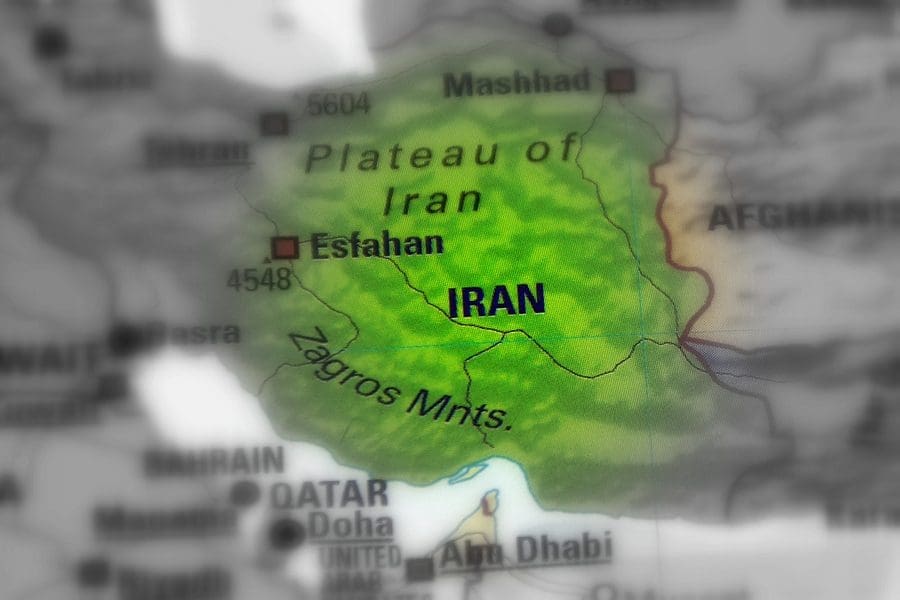

WASHINGTON, DC – September 5, 2026 (STL.News) President Donald Trump is again raising the possibility of expanding U.S. military action against Iran, saying the United States could strike a heavily fortified underground complex known as Pickaxe Mountain “very soon” if Washington determines nuclear-related activity is occurring there.
Trump made the comments Friday, Sept. 4, while speaking with reporters at the White House. Reuters reported that the president said the United States may soon target Pickaxe Mountain, a deeply buried complex located near Iran’s heavily damaged Natanz uranium enrichment facility.
The statement represents the latest warning from Trump concerning one of the most closely watched remaining pieces of Iran’s nuclear infrastructure.
“We may hit Pickaxe Mountain very soon,” Trump told reporters, according to reports of his remarks, adding the qualification that action could be taken “if there is anything going on with Pickaxe.”
Trump has made similar threats before, meaning Friday’s remarks do not establish that a strike has been ordered or that one is imminent. They do, however, put renewed attention on a facility that has become increasingly important in the confrontation over Iran’s nuclear capabilities.
What is Pickaxe Mountain?
Pickaxe Mountain is the name commonly used for a heavily fortified underground complex near Natanz in central Iran.
Reuters describes the location as containing two deeply buried tunnel complexes. The facility has attracted particular attention because of its proximity to Natanz, historically one of the most important centers of Iran’s uranium-enrichment program.
The site is also known as Mount Kolang, or K?h-e Kolang. Construction has been underway for years, and analysts studying satellite imagery have attempted to determine what Iran intends to place inside the underground complex.
ABC News reported in July that analysts believe portions of the complex may be approximately 100 meters underground. That depth could make conventional attacks much harder and raise questions about whether even specialized bunker-penetrating weapons could completely destroy underground facilities.
Iran announced in 2021 that the site would serve as a centrifuge assembly facility following the destruction of an earlier facility near Natanz.
Centrifuges are essential equipment for enriching uranium. The presence, number and condition of Iranian centrifuges have therefore become important questions in assessing how quickly Tehran could potentially rebuild damaged portions of its enrichment infrastructure.
Trump has threatened Pickaxe Mountain before
Friday’s comments were not Trump’s first warning involving the underground facility.
On July 21, Trump said the United States would probably strike the area “pretty soon” and “very heavily.” At the time, he said Iran may have moved centrifuges to the site but acknowledged that the United States did not have that information definitively “on record.”
Several days later, Trump discussed the facility again during an appearance on Fox & Friends.
According to a White House account published July 28, Trump said U.S. intelligence was closely watching Pickaxe Mountain and that the United States would have to target the location if Washington and Tehran failed to reach an agreement.
The repetition of the warning is significant, but it remains important to distinguish public threats from confirmed military decisions.
As of the latest available reporting, Trump had publicly raised the possibility of attacking Pickaxe Mountain. That is not the same as confirmation that the president has ordered such an attack.
Natanz has already suffered attacks
Pickaxe Mountain’s location near Natanz adds another dimension to the threat.
Natanz has been a central component of Iran’s nuclear program for years and has repeatedly been caught in the confrontation surrounding Tehran’s enrichment capabilities.
An International Atomic Energy Agency incident report states that the Natanz nuclear facility was subjected to aerial and missile attacks involving Israel and the United States on March 21, 2026.
According to the IAEA report, Iranian nuclear authorities reported no increase in off-site radiation following those attacks.
That history makes the nearby underground complex particularly important.
If above-ground or less-protected nuclear infrastructure is vulnerable to air attacks, deeply buried facilities potentially provide Iran with a way to protect equipment and preserve the ability to reconstruct parts of its nuclear program.
Precisely what equipment is currently located inside Pickaxe Mountain, however, remains uncertain publicly.
Questions remain about Iran’s centrifuges
One central question surrounding Pickaxe Mountain involves centrifuges.
Trump acknowledged in July that Iran “may have” transferred centrifuges there, while stopping short of saying the information had been conclusively established.
ABC News reported that intelligence cited in other reporting suggested Iran transferred thousands of centrifuges into Pickaxe Mountain. However, it remained uncertain whether such a transfer, if it occurred, was intended to establish a new enrichment operation or simply protect equipment from attack.
That distinction is critical.
Possessing centrifuges does not by itself demonstrate that a facility is actively enriching uranium. A functioning enrichment operation requires equipment, infrastructure, nuclear material, and other supporting systems.
Trump himself highlighted that distinction in July when he said that centrifuges alone would not mean much without nuclear material.
The uncertainty surrounding Iran’s nuclear equipment has also increased because international inspectors have faced significant limitations in monitoring parts of the Iranian nuclear program.
Without comprehensive inspections, governments and outside analysts increasingly depend on intelligence, satellite imagery and other indirect methods to determine what may be happening at protected facilities.
Could the United States destroy Pickaxe Mountain?
The complex’s extraordinary depth raises another major question.
The U.S. military possesses specialized weapons designed to penetrate hardened underground targets. But analysts have questioned whether Pickaxe Mountain is buried too deeply for an airstrike to guarantee destruction of everything inside.
Experts cited by ABC News previously said that even the Massive Ordnance Penetrator, one of the most powerful conventional bunker-busting weapons in the U.S. arsenal, might not guarantee destruction of the underground complex.
That does not mean an attack could have no effect.
An operation could target tunnel entrances, power systems, ventilation, communications, or other supporting infrastructure rather than attempting to penetrate every underground chamber.
Damaging or collapsing entrances could make the facility difficult to access and potentially delay operations or construction.
But the effectiveness of any hypothetical attack would depend on factors that remain classified, including U.S. intelligence about the site’s design, depth and internal configuration.
Broader U.S.-Iran conflict continues
Trump’s latest comments come amid continuing military confrontation between Washington and Tehran.
The president on Friday also defended the administration’s characterization of the conflict and argued that U.S. operations have substantially weakened Iran’s nuclear capabilities. The Associated Press reported that Trump described the conflict as relatively limited from the U.S. perspective while reiterating that Iran would not be permitted to obtain a nuclear weapon.
The conflict has nevertheless carried significant human, military and economic costs.
Regional instability has also affected global energy markets.
Oil prices jumped sharply earlier in the week following renewed U.S.-Iran fighting and concerns about disruptions to Middle Eastern energy supplies.
Reuters reported that Brent crude settled at $94.65 per barrel Tuesday, Sept. 1, an increase of 4.6%, while West Texas Intermediate gained 5.2% to $90.22. The price increases reflected renewed concerns about the security of energy shipments through the Middle East and particularly the Strait of Hormuz.
The Strait of Hormuz is one of the world’s most strategically important energy transit corridors. Any sustained disruption there can influence oil and refined-product prices far beyond the Middle East.
Additional military escalation could therefore carry consequences extending well beyond Iran and the United States.
Nuclear concerns remain at the center of confrontation
Despite the broader military confrontation, Iran’s nuclear capabilities remain one of Washington’s central concerns.
Trump has repeatedly said that Iran will not be permitted to obtain a nuclear weapon.
The dispute, however, involves several separate questions: the condition of Iran’s existing enrichment infrastructure, the whereabouts of nuclear material and centrifuges, Iran’s ability to rebuild damaged facilities, and whether underground locations such as Pickaxe Mountain could eventually support renewed enrichment.
Those questions become considerably harder to answer when international inspectors lack full access.
That uncertainty can itself contribute to escalation because governments may make decisions based on intelligence assessments rather than direct verification by international inspectors.
What happens next
The immediate question is whether Trump’s latest warning develops into military action or remains part of Washington’s pressure campaign against Tehran.
There has been no publicly confirmed strike on Pickaxe Mountain associated with Trump’s Sept. 4 remarks as of this report.
His statement nevertheless puts the underground facility back at the center of the U.S.-Iran confrontation.
A strike against Pickaxe Mountain could represent a significant expansion of efforts to damage or prevent the reconstruction of Iran’s nuclear infrastructure. It could also generate another Iranian response and increase concerns about regional military escalation and disruptions to global energy markets.
Alternatively, the threat could be intended partly to pressure Tehran over its nuclear activities and future negotiations.
Trump’s previous statements demonstrate that Pickaxe Mountain has been on Washington’s radar for months.
In July, he publicly discussed striking it. Later that month, he said the United States was closely monitoring the facility and linked possible military action to the absence of a deal. Now, in early September, the president has again said an attack could come “very soon.”
Whether that warning becomes military action remains unknown.
For now, Pickaxe Mountain — a deeply buried facility near one of the most important nuclear sites in Iran — has emerged as one of the key locations to watch as the U.S.-Iran confrontation continues.
